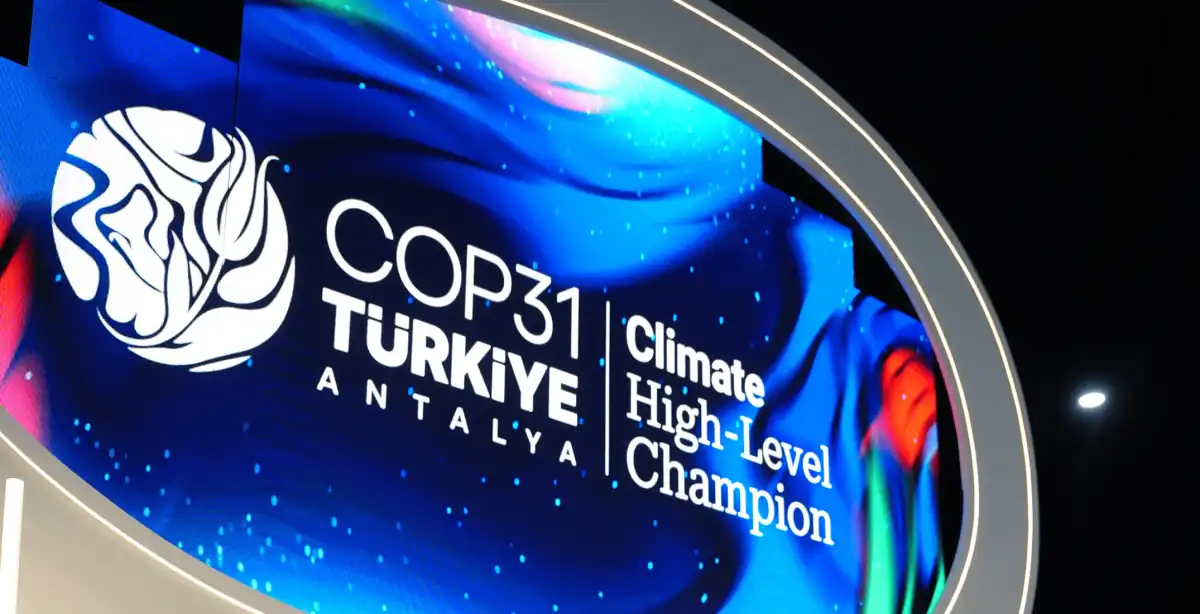
The emphasis that climate goals must be realized not merely through commitments but through implementable solutions on the ground rose from Istanbul within the scope of the Zero Waste Forum 2026. Through a joint declaration published ahead of COP31, key actors of global climate governance positioned zero waste and circular economy approaches among the primary tools of climate action.
The Zero Waste Forum 2026, organized within the scope of the Zero Waste Movement growing under the pioneering of First Lady Emine Erdoğan, Founder of the Zero Waste Movement, Chair of the United Nations Advisory Board of Eminent Persons on Zero Waste, and Honorary President of the Zero Waste Foundation, has transformed into a significant platform aimed at increasing implementation capacity in the global climate agenda.
The Global Climate Action Joint Declaration published by current and former High-Level Climate Champions during the Forum aims to strengthen the role of non-state actors to achieve the goals of the Paris Agreement, disseminate transformation policies based on resource efficiency, and more strongly integrate the zero waste approach into climate strategies.
Zero Waste and Circularity Among the New Tools of Climate Action
In the declaration prepared under the leadership of Samed Ağırbaş, President of the Zero Waste Foundation and COP31 High-Level Climate Champion, and Dan Ioschpe, COP30 High-Level Climate Champion; the joint will towards strengthening the Climate Action Agenda, accelerating existing solutions, and increasing multi-stakeholder collaborations was put forth.
Recalling that the Zero Waste Movement, initiated by First Lady Emine Erdoğan in 2017, has today transformed into a global environmental vision by a resolution of the United Nations General Assembly, the declaration emphasized that zero waste is a holistic transformation model encompassing not merely waste management but combating climate change, circular economy, sustainable development, and resource efficiency.
Drawing attention to the role of cities, businesses, investors, academia, civil society, and other non-state actors in the transformation within the scope of the Climate Action Agenda, the declaration expressed that the COP31 process to be hosted by Türkiye will bring new momentum to implementation-based climate solutions.
Global Roadmap Aligned with COP31 Priorities
The declaration supported the strengthening of zero waste and circular economy applications in line with resource efficiency, energy transition, renewable energy, local climate action, and multi-stakeholder collaborations, which are among the priority topics of the COP31 process to be chaired by Murat Kurum, Minister of Environment, Urbanization and Climate Change.
In the declaration published under the umbrella of the Marrakech Partnership for Global Climate Action, while making a call for joint action for a fair, inclusive, and resilient climate future, the establishment of the "Zero Waste and Circularity Climate High-Level Champions Working Group" was adopted.
The Working Group aims to mobilize cities, businesses, investors, and non-governmental organizations to contribute to making zero waste and circular economy applications an integral part of long-term climate strategies.
"We Must Now Scale Up the Implementation of Solutions"
In his evaluation following the joint declaration, Samed Ağırbaş, President of the Zero Waste Foundation and COP31 High-Level Climate Champion, stated that implementing existing solutions faster and on a larger scale is of critical importance in the climate struggle.
Ağırbaş expressed that during the COP31 process, they will focus on strengthening implementation-oriented climate action and making sustainable transformation visible in the daily lives of societies.
Emphasizing that the fight against climate change lies not merely in setting new goals but in transforming these goals into concrete results in cities, production processes, and lifestyle habits, Ağırbaş stated that global collaborations are the fundamental element of this transformation.
Global Priorities: Food Waste, Methane Reduction, and Circular Economy
COP30 High-Level Climate Champion Dan Ioschpe, on the other hand, drew attention to the fact that despite the increase in climate commitments on a global scale, disparities in the field of implementation continue.
Ioschpe expressed that reducing food waste, lowering methane emissions, disseminating circular economy solutions, strengthening climate applications at the city scale, and developing sustainable production-consumption models are among the priority areas.
A New Contribution from Istanbul to Global Climate Cooperation
The Global Climate Action Joint Declaration published within the scope of the Zero Waste Forum 2026 is evaluated as a significant step strengthening international cooperation to put climate goals into practice ahead of COP31.
With this new step, the Zero Waste Movement, growing under the pioneering of First Lady Emine Erdoğan, goes beyond merely being an environmental approach; it advances towards becoming a global solution platform at the intersection of climate diplomacy, economic transformation, and sustainable development agendas.


