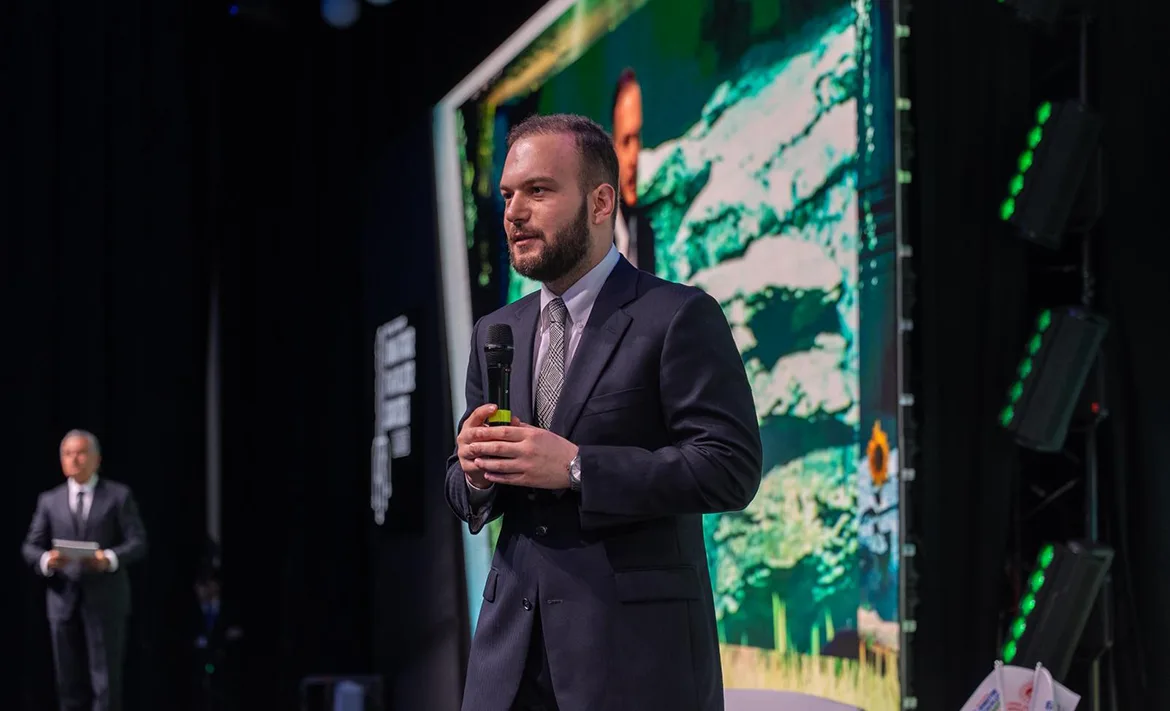
Samed Ağırbaş, President of the Zero Waste Foundation and COP31 High-Level Climate Champion, delivered important messages within the scope of the 13th World Urban Forum held in Baku from May 17-22.
"Zero Waste is the Fundamental Way to Build Sustainable Urban Systems"
In an interview with the Azerbaijan State News Agency (AZERTAC), Samed Ağırbaş stated that low-carbon urbanization models, resource efficiency, and circular economy practices will be decisive for the cities of the future, adding that the "zero waste" approach is one of the fundamental ways to establish sustainable urban systems.
Samed Ağırbaş's Messages at the Baku 13th World Urban Forum:
"The building and construction sector currently accounts for approximately 40 percent of global greenhouse gas emissions and consumes more than a third of the world's energy. This sector consumes about half of all raw materials extracted annually and more than 20 percent of the world's freshwater resources. New housing construction leads to urbanization and land-use change, putting severe pressure on forests, wetlands, and biodiversity. The necessary infrastructure, from roads and bridges to utility networks, further degrades ecosystems. The carbon intensity of traditional materials like concrete is very high: a significant portion of emissions still occurs during the production phase. The housing sector is one of the determining factors of resource use and climate emissions in the 21st century."
"Zero Waste Principles Can Decouple Urban Growth from Environmental Degradation"
"The solution lies in a systematic 'zero waste' approach. However, this challenge also creates an unprecedented opportunity. By applying 'zero waste' principles throughout the entire life cycle of housing—from material selection to modular design, from demolition to reuse—we can decouple urban growth from environmental degradation. The 'zero waste' concept aims not only to manage waste but to prevent it at its source."
"In the housing sector, the 'zero waste' approach is one of the fundamental elements of sustainable development. In the context of housing, 'zero waste' is not just a small strategy for sustainable development; it is a fundamental way of creating a circular economy, reducing emissions, and building sustainable urban systems."
"The zero waste approach offers hope for the housing sector by effectively addressing the issue of 'embodied carbon,' which accounts for approximately 11 percent of global emissions. Furthermore, the implementation of circular practices does not necessarily mean a financial burden. It can reduce embodied carbon in the built environment by up to 75 percent by 2050, making operations more efficient and economically viable. Unlocking climate finance for 'zero waste' solutions in housing will be a key factor in mainstreaming these approaches in rapidly urbanizing regions."
"Urbanization is inevitable. Ecological degradation is not. The 'zero waste' approach to housing shows us how we can achieve the former while avoiding the latter."


