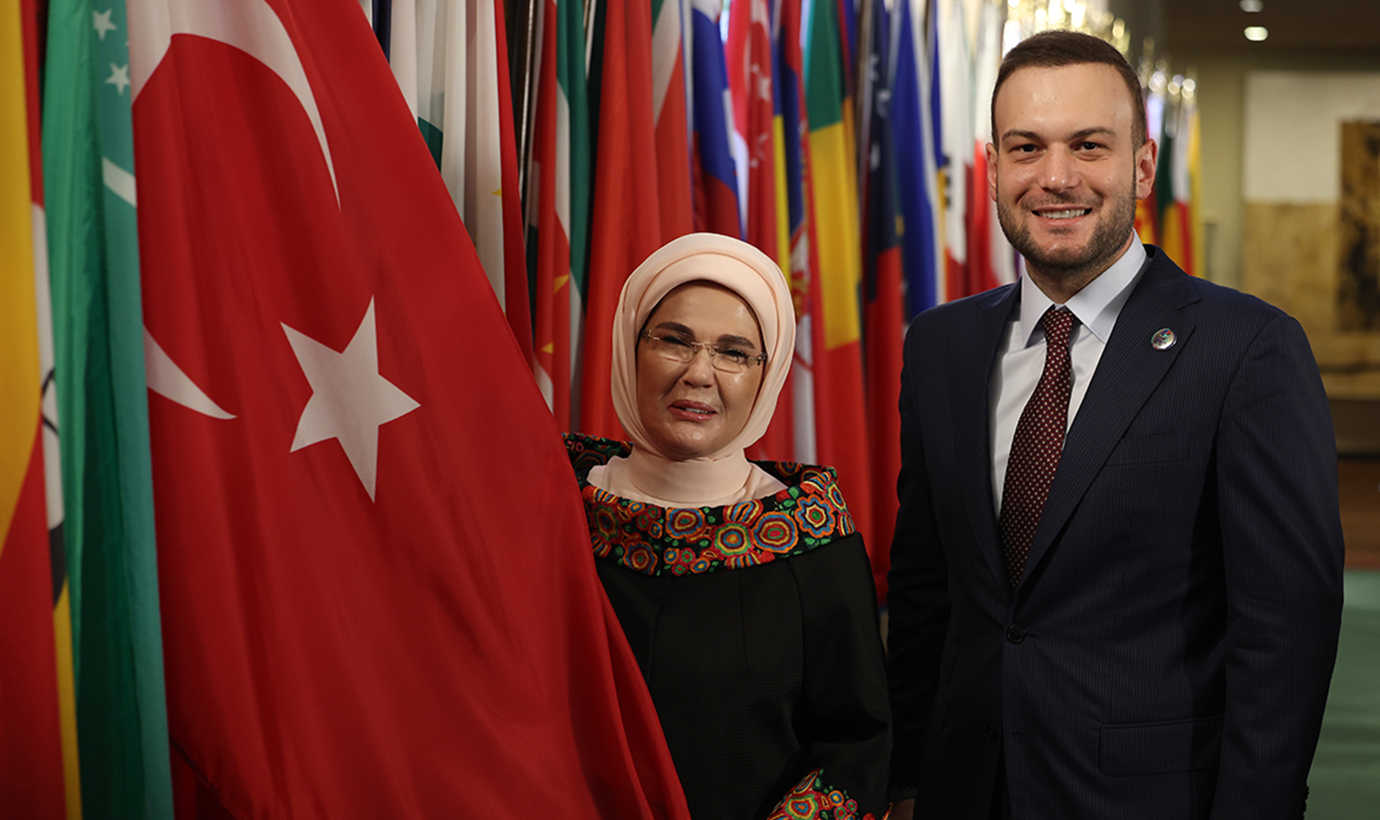
At the LDC-GIF Launch and High-Level Dialogue held in New York, participants discussed strengthening the green industrialization capacity of Least Developed Countries, facilitating technology transfer and improving access to finance. With the Zero Waste Foundation among the partners of the mechanism, efforts are underway to operationalize the initiative at COP31 in Antalya, while emphasizing that the green transition should advance alongside resource efficiency and concrete investments.
The vision put forward by Ms. Emine Erdoğan, Founder of the Zero Waste Movement, Chairperson of the United Nations Advisory Board of Eminent Persons on Zero Waste and Honorary Chairperson of the Zero Waste Foundation, based on efficient use of resources, prevention of waste and the promotion of sustainable production and consumption, continues to expand beyond Türkiye through initiatives in different countries and international platforms.
In line with this vision, the Zero Waste Foundation participated as a partner in the New York launch and high-level dialogue of the Least Developed Countries Green Industrialization Facilitation Mechanism (LDC-GIF), developed by Türkiye to support the green industrialization processes of Least Developed Countries.
Held at United Nations Headquarters, the meeting highlighted the need to address technology transfer, resource efficiency, project development and access to finance together in order to strengthen green industrialization.
Green Industrialization Agenda Extending from New York to COP31
The “LDC-GIF Launch and High-Level Dialogue: Global Partnership for Green Industrialization and Technology Transfer,” held on the margins of the 81st UN General Assembly and New York Climate Week, was chaired by Mehmet Fatih Kacır, Minister of Industry and Technology.
The meeting was attended by Murat Kurum, Minister of Environment, Urbanization and Climate Change and President of COP31, Samed Ağırbaş, President of the Zero Waste Foundation and COP31 High-Level Climate Champion, and Rabab Fatima, United Nations Under-Secretary-General and High Representative for OHRLLS.
Global Partnership Agenda
The dialogue, with the Zero Waste Foundation among its partners, brought together approximately 120 high-level participants. Ministers and senior government representatives from Least Developed Countries joined representatives from United Nations organizations, international and regional financial institutions, development finance institutions, climate funds, technology organizations and the private sector.
Green Industrialization Considered Part of Development Capacity
The meeting addressed the core approach of LDC-GIF and the needs of Least Developed Countries in green industrialization, while a comprehensive presentation of the mechanism was delivered by Ahmet Halit Hatip, Director General for European Union and Foreign Relations at the Ministry of Industry and Technology.
Representatives of different countries and international organizations also shared their views, recommendations and expectations regarding the mechanism.
One of the common messages emerging from the dialogue was that green industrialization in Least Developed Countries should not be considered solely as a climate objective, but also as an important development opportunity for increasing production capacity, raising local added value, creating employment, strengthening economic resilience and enabling countries to participate in the green value chains of the future.
As of 2024, the 44 Least Developed Countries, representing approximately 15 percent of the world's population, accounted for only 1.5 percent of global GDP and 1.3 percent of global manufacturing value added, highlighting the scale of the potential in green industrialization.
Country-Specific Models Gain Prominence in Technology Transfer
Participants emphasized that access to technology alone is not sufficient for implementing green industrialization and that technology transfer needs to be addressed together with technical capacity building, access to infrastructure, project development and appropriate financing mechanisms.
Accordingly, LDC-GIF is being developed as a demand-driven mechanism shaped around the priorities and needs of individual countries, placing country-specific technology transfer at its center rather than one-size-fits-all solutions, while bringing together existing technology, expertise, project development and financing resources.
Implementation Through Pilot Projects
The meeting also discussed starting with investment-ready or near-investment-ready projects in 10 pilot Least Developed Countries and matching these projects with technology providers, technical partners, development organizations, infrastructure opportunities and existing financing sources.
Within this framework, LDC-GIF is intended to operate not as a new and parallel financing architecture, but as an enabling and catalytic platform that facilitates access to existing resources and capacities and channels them toward concrete green industrial investments.
Ağırbaş: “The Green Transition Must Be Addressed Together with Efficient Use of Resources”
The dialogue, which also featured contributions from Samed Ağırbaş, President of the Zero Waste Foundation and COP31 High-Level Climate Champion, highlighted the importance of considering green industrialization together with resource efficiency and the Zero Waste approach.
During the COP31 process, the Zero Waste Foundation continues to work on international platforms to address efficient use of resources, the circular economy, Zero Waste and inclusive green transformation together with the implementation dimension of climate action.
The approach under LDC-GIF, focusing on technology transfer, strengthening production capacity and implementing green industrial investments, directly intersects with resource efficiency and sustainable production objectives.
In this respect, the meeting represented an important gathering for international cooperation aimed at translating the green transition into concrete investments and implementation on the ground within the implementation-oriented approach of COP31.
Technology Bank to Become an Important Component of the Mechanism
The proposed Secretariat role of the United Nations Technology Bank for Least Developed Countries (UNTBLDC) under LDC-GIF was also given particular importance during the dialogue.
The Technology Bank’s existing mandate and experience in strengthening the science, technology and innovation capacities of Least Developed Countries and providing access to appropriate technologies and technology transfer were considered an important foundation for connecting country needs with technological solutions under the mechanism.
The meeting also explored opportunities for cooperation to accelerate technology transfer, make projects investment-ready, strengthen technical capacity, facilitate access to finance and develop partnerships between countries and international organizations.
COP31 Antalya as the Target for LDC-GIF
The dialogue in New York represented an important stage in developing LDC-GIF ahead of COP31 in Antalya, strengthening it through international partnerships and shaping its operational structure.
The views and recommendations put forward during the meeting are expected to contribute to developing the mechanism’s operational structure, shaping voluntary contributions and partnerships, and preparing implementation with the first pilot countries.
COP31 Antalya Target
LDC-GIF, which is targeted to be officially operationalized at COP31 in Antalya hosted by Türkiye in November, is being developed to strengthen the green industrialization capacity of Least Developed Countries, facilitate access to technology and finance, and implement concrete investment projects.
The process, to which the Zero Waste Foundation contributes as a partner, also aligns with COP31’s approach of becoming a “COP of Implementation,” where existing commitments are transformed into concrete implementation, investments and partnerships rather than simply setting new targets.