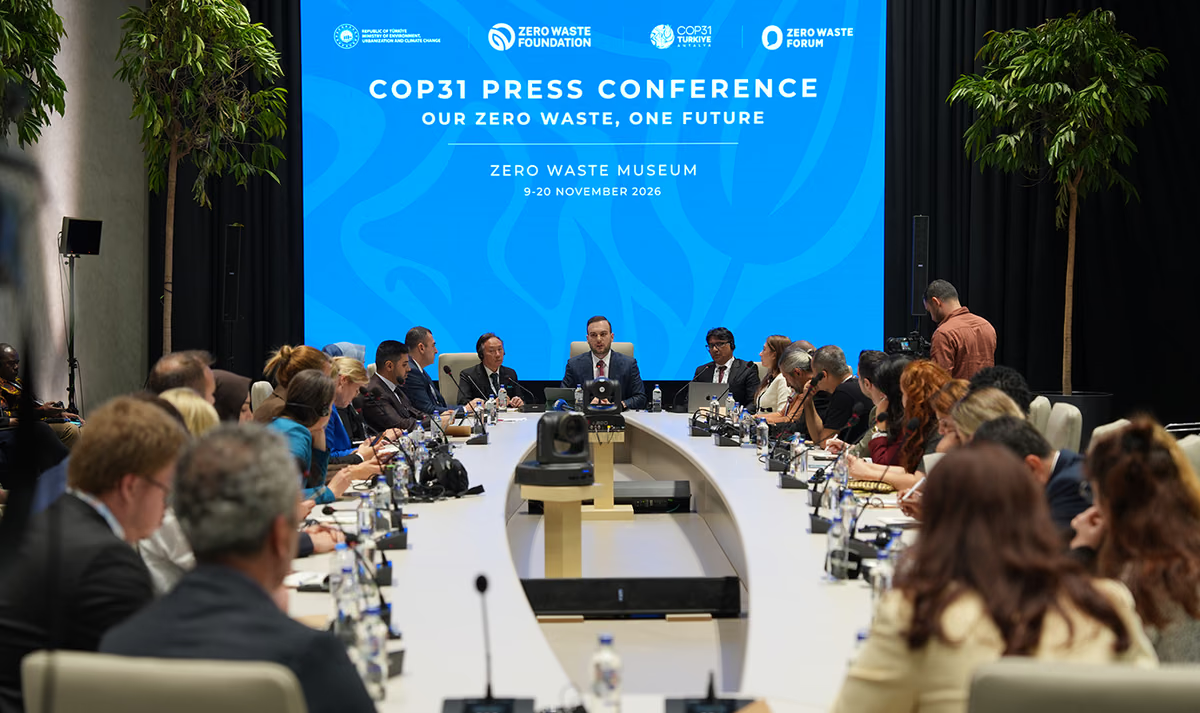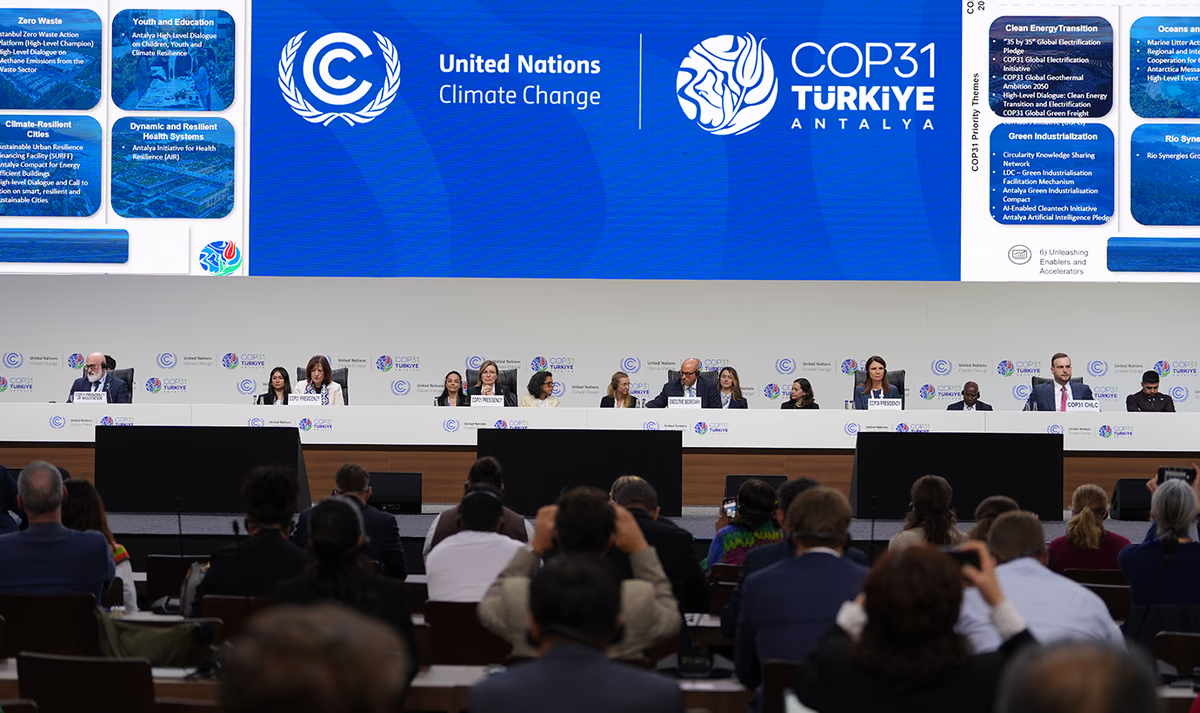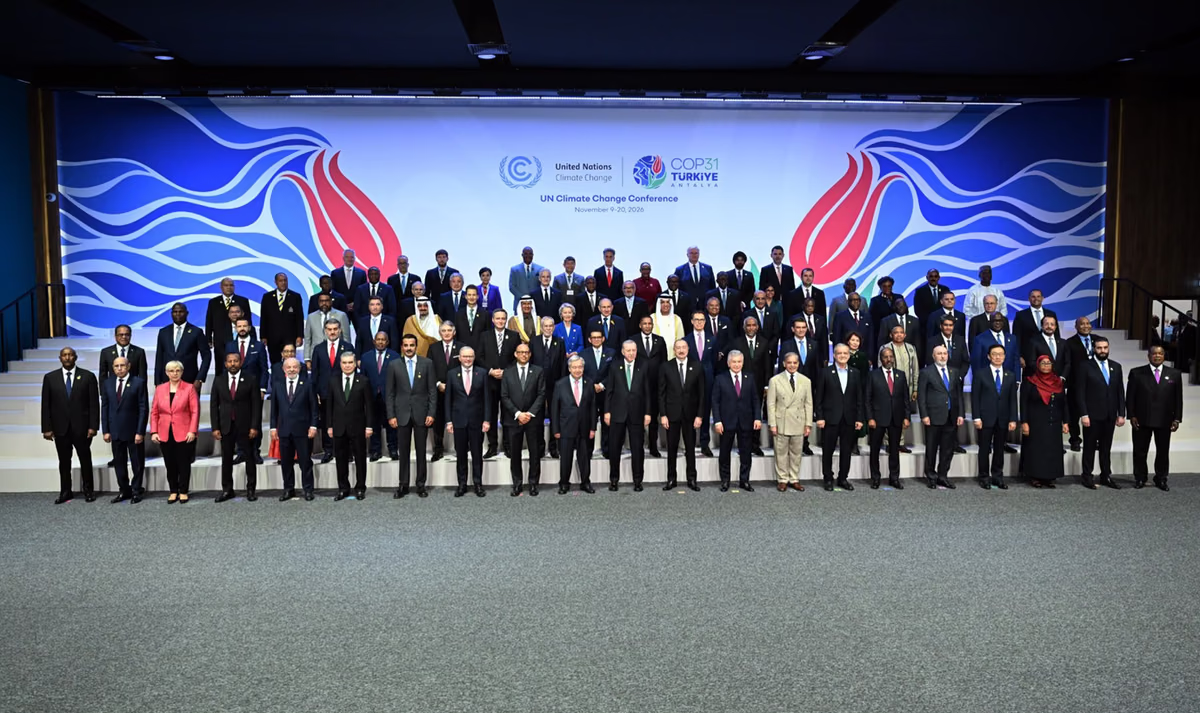
On the third day of COP31 in Antalya, 102 leaders from 95 countries came together at the Leaders’ Summit. Of the 396 sessions held on 11 November, designated as the Zero Waste thematic day, 97 were devoted to this topic. At the summit, where President Recep Tayyip Erdoğan delivered the opening speech, the priorities of climate action and Türkiye’s zero waste efforts were on the agenda.
The third day of the 31st Conference of the Parties (COP31) to the United Nations Framework Convention on Climate Change began with the Leaders’ Summit. President Recep Tayyip Erdoğan described the approach Türkiye adopted in taking on the COP31 Presidency with these words: “We have two options before us. Either we will look at the difficulties and complain, or we will hold on to hope and take action. Instead of shaking our fists at the darkness, we chose to light a candle. As Türkiye, we took on the COP31 Presidency with precisely this understanding.” Sessions hosted by the Zero Waste Foundation also addressed international cooperation, energy transition, food waste and sustainable development.
Practices to Reduce the Conference’s Environmental Impact
Recalling that Türkiye is hosting the COP Leaders’ Summit for the first time, Erdoğan said the working and event areas were designed to reflect the richness of Anatolia. He stated that low-emission transport, zero waste, water and energy efficiency, and carbon offsetting practices have been implemented together to minimize the conference’s environmental impact.
Recovery Rates and the Results of Zero Waste Efforts
Describing Türkiye’s priorities in the fight against the climate crisis, President Erdoğan referred to the national and international achievements of the Zero Waste Movement, launched in 2017 by Her Excellency Emine Erdoğan, Honorary President of the Zero Waste Foundation. He said the movement that began in Türkiye has turned into a global environmental initiative.
According to the data Erdoğan shared, the national recovery rate, which was around 13 percent in 2017, approached 40 percent by the end of 2025. Noting that 90 million tons of waste were brought into the economy during this period, Erdoğan counted the United Nations General Assembly’s declaration of 30 March as the International Day of Zero Waste among the global achievements of the common struggle.
Emphasizing the determination to continue working toward the zero waste goal, President Erdoğan said: “God willing, it will not stop here; we will continue to work and make efforts until we reach the zero waste goal.”
10 Priority Areas for Climate Action
Erdoğan noted that they aim for concrete progress in 10 priority areas, including the clean energy transition, zero waste, food security, industrialization, climate-resilient cities and the protection of the oceans. He said that over the next 10 years they aim to increase the rate of electricity use by 50 percent, halve the growth in waste generation and spread the use of circular materials in industry.
Referring to Türkiye’s relationship with nature and the effects of the climate crisis in different geographies, Erdoğan said: “At the center of our civilization lies respect for nature; the earth is a sacred trust that must be protected and cared for. We all know very well that a burning forest, a drying river, a polluted sea and a felled tree hurt the entire planet. From the Mediterranean Basin to Africa, from Asia to the small island states of the Pacific, no country is exempt from this. We have two options before us. Either we will look at the difficulties and complain, or we will hold on to hope and take action. Instead of shaking our fists at the darkness, we chose to light a candle. As Türkiye, we took on the COP31 presidency with precisely this understanding.”
The Zero Waste Theme Was Addressed in 97 Sessions
The designation of 11 November as the Zero Waste thematic day was also reflected in the conference program. Zero waste was addressed in 97 of the 396 sessions held during the day. Resource efficiency, the circular economy, waste prevention and recovery, sustainable production and consumption, and holistic solutions in the fight against climate change were the main topics of these sessions.
Five Sessions on the Foundation’s Stages, from Education to Energy Transition
The Our Common Home and Zero Waste Forum stages within the Zero Waste Museum in the COP31 Blue Zone also hosted five sessions on the third day. The program covered “The Role of International Education in Tackling the Climate Crisis: The Example of Türkiye Scholarships,” “International Investments and Partnerships in the Energy Transition,” “Critical Minerals and the Energy Transition,” “Bio-LNG: Ways to Decarbonize Global Routes” and “Regional Governments on Food Waste and Methane.”
These meetings assessed the contribution of international education and cooperation to the fight against climate change, investment models that will support the energy transition and the place of critical minerals in sustainable energy systems. Opportunities for decarbonization in transport and the role regional governments can take in preventing food waste were also discussed.
Through its work throughout the conference, the Zero Waste Foundation continues to carry the understanding that zero waste is an integral part of climate action to the international agenda. The movement, which is spreading on a global scale under Türkiye’s leadership, was addressed at different levels in the third day’s program, from leaders’ statements to thematic sessions.