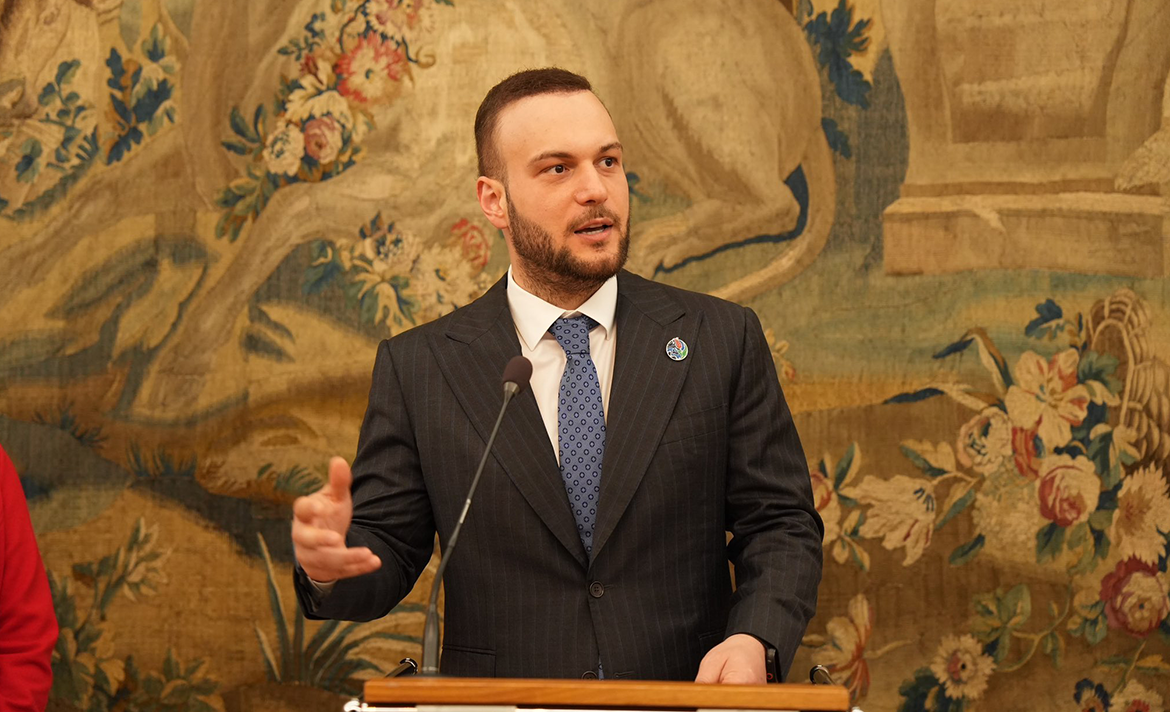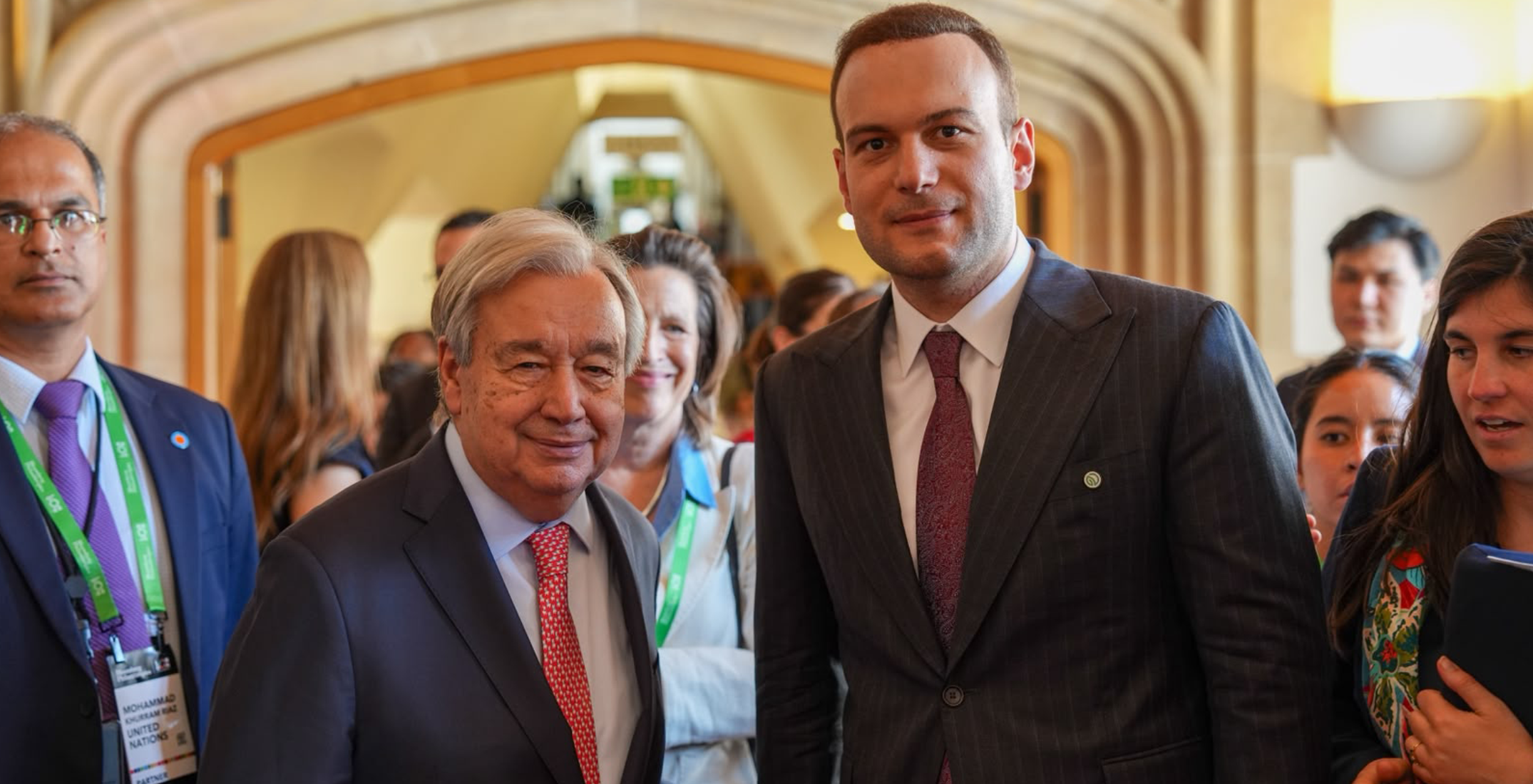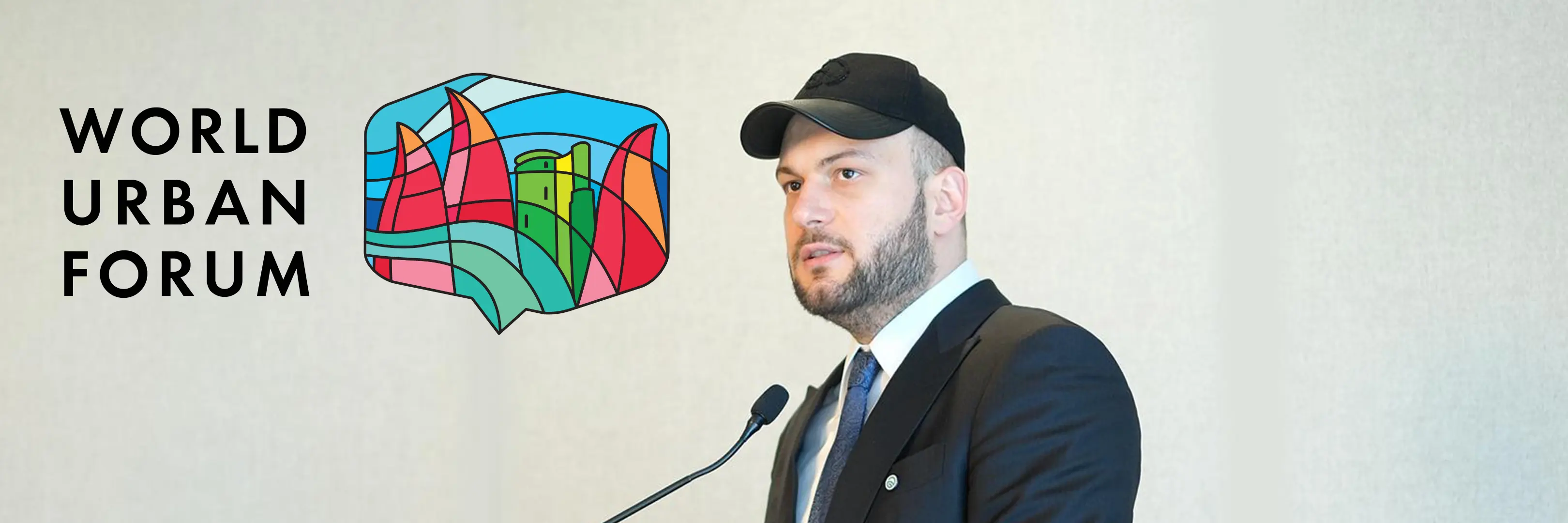
Samed Ağırbaş, President of the Zero Waste Foundation and COP31 High-Level Climate Champion, stated that the "zero waste" approach is the fundamental solution model in building sustainable cities during an interview with AZERTAC within the scope of the 13th World Urban Forum held in Baku, Azerbaijan on May 17–22. Ağırbaş said, "By 2050, approximately 70 percent of the world's population will live in cities. Therefore, the zero waste approach is no longer just an environmental choice; it is an obligatory part of sustainable urbanization."
Within the scope of international works carried out under the auspices of Mrs. Emine Erdoğan, Chair of the United Nations Advisory Board of Eminent Persons on Zero Waste and Honorary President of the Zero Waste Foundation, the Zero Waste Foundation handles the zero waste approach not only through waste management but also through the perspectives of climate diplomacy, sustainable development, circular economy, and urban planning. While preparations for COP31, to be hosted by Türkiye on November 9–20, 2026, continue, the relationship between urbanization and climate stands out as one of the most critical topics on the global agenda.
According to experts, the vast majority of the world's population will live in cities over the next quarter-century, and rapid population growth, especially in Asia and Africa, will significantly increase pressure on housing, infrastructure, energy, and environmental policies. In this context, the 13th World Urban Forum held in Baku, the capital of Azerbaijan, is considered one of the most important global platforms addressing the effects of rapid urbanization on communities, cities, climate policies, and sustainable development.
Elements That Will Determine the Cities of the Future
Speaking to the Azerbaijan State News Agency AZERTAC within the scope of the forum, Zero Waste Foundation President and COP31 High-Level Climate Champion Samed Ağırbaş stated that especially low-carbon urbanization models, resource efficiency, and circular economy practices will be decisive for the cities of the future. Ağırbaş emphasized that the zero waste approach is not limited only to recycling waste; it is a comprehensive transformation model that requires rethinking production, consumption, design, and usage processes as a whole.
Heavy Consequences of Rapid Urbanization
Drawing attention to the impact of the housing sector on global emissions, Ağırbaş said that the building and construction sector today accounts for approximately 40 percent of global greenhouse gas emissions and consumes more than one-third of the world's energy. In addition, stating that the sector uses about half of the raw materials extracted every year and puts serious pressure on freshwater resources, Ağırbaş expressed that rapid urbanization has heavy consequences on forests, wetlands, and biodiversity.
Pointing out that traditional building materials such as concrete have a high carbon intensity, Ağırbaş said that the housing sector has become one of the most decisive areas of resource use and climate emissions in the 21st century. According to Ağırbaş, the solution lies in a systematic zero waste approach covering the entire life cycle of the construction sector.
Zero Waste Concept is the Fundamental Building Block of Sustainable Development
Samed Ağırbaş said, "By applying zero waste principles throughout the entire life cycle of housing—from material selection to modular design, and demolition to reuse—we can decouple urban growth from environmental degradation." Emphasizing that the zero waste approach means preventing the generation of waste at its source rather than just managing the resulting waste, Ağırbaş stated that this approach is one of the fundamental building blocks of sustainable development.
Expressing that the zero waste paradigm covers the entire life cycle of housing, Ağırbaş said that resource efficiency and sustainable supply chains stand out in production and design stages, modular technologies and recycling practices in the construction phase, and energy efficiency and adaptive architecture in the usage process. Stating that at the end of the life cycle, building components can be reused with a "design for deconstruction" approach, Ağırbaş noted that buildings could also function as "material banks" in the cities of the future.
Zero Waste Offers Economically Efficient Models
Drawing attention to economic and environmental gains, Ağırbaş said that circular economy practices offer solutions to the "embodied carbon" problem in the housing sector. Stating that embodied carbon in the built environment can be reduced by up to 75 percent by 2050, Ağırbaş expressed that zero waste practices offer models that are not only environmental but also economically viable and efficient. He also emphasized the critical role of climate finance in scaling up zero waste solutions in the housing sector.
An Important Policy Perspective in the COP31 Process
At the end of his interview, Samed Ağırbaş used the expressions, "Urbanization is inevitable. Ecological degradation is not. A zero waste approach to housing shows how we can achieve the former while avoiding the latter."
This approach put forward by the Zero Waste Foundation offers an important policy perspective for stronger global handling of urbanization, sustainable infrastructure, circular economy, and climate resilience headings during the COP31 process. Especially aimed at reducing the environmental impacts of accelerating urbanization in developing countries, this model is expected to find more place in international climate negotiations in the upcoming period.