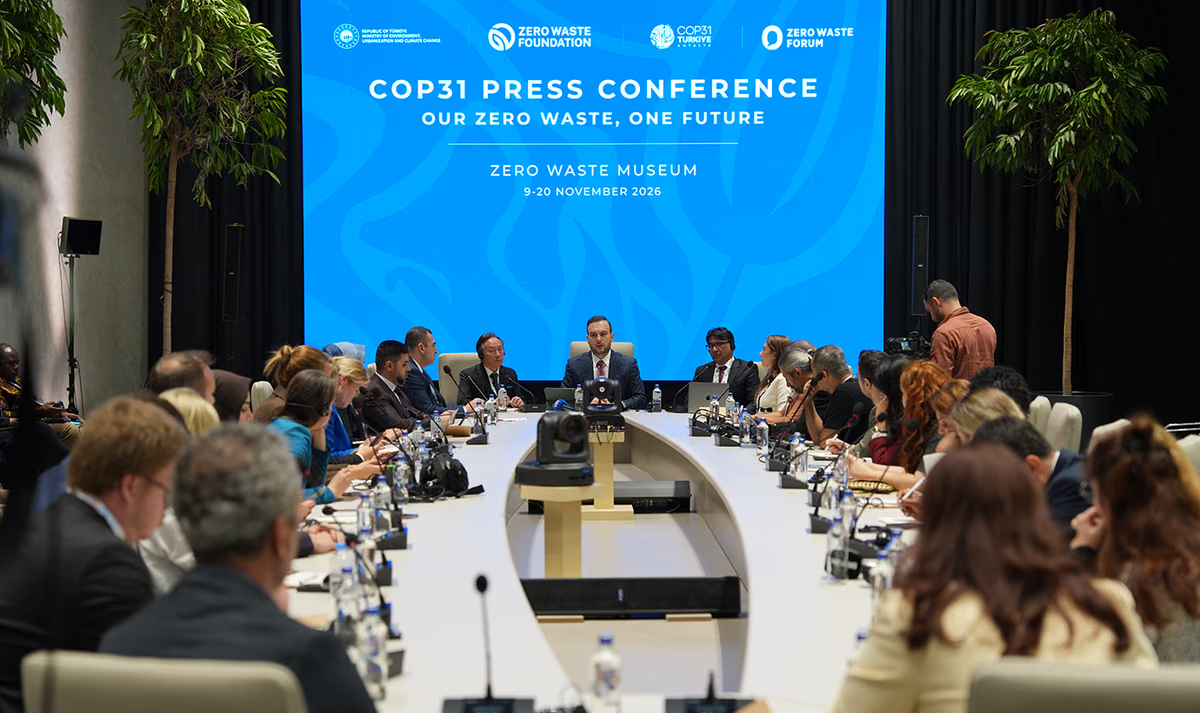
Meeting members of the press within COP31 in Antalya, Samed Ağırbaş, President of the Zero Waste Foundation and COP31 High-Level Climate Champion, described the implementation goals to be followed after the summit and the Foundation’s national and international work. The “Our Zero Waste Future” report introduced at the meeting points out that, through zero waste and circular economy practices, 149 gigatons of carbon dioxide equivalent greenhouse gas emissions can be prevented by 2050.
Addressing national and international press at the meeting held at the Zero Waste Museum in the COP31 Blue Zone, Ağırbaş said members of the press carry an important responsibility in announcing the will shown in Antalya to the world public. He also assessed the role of zero waste in climate action and the goals of the coming period.
Participation Figures and Expectations for Implementation After the Summit
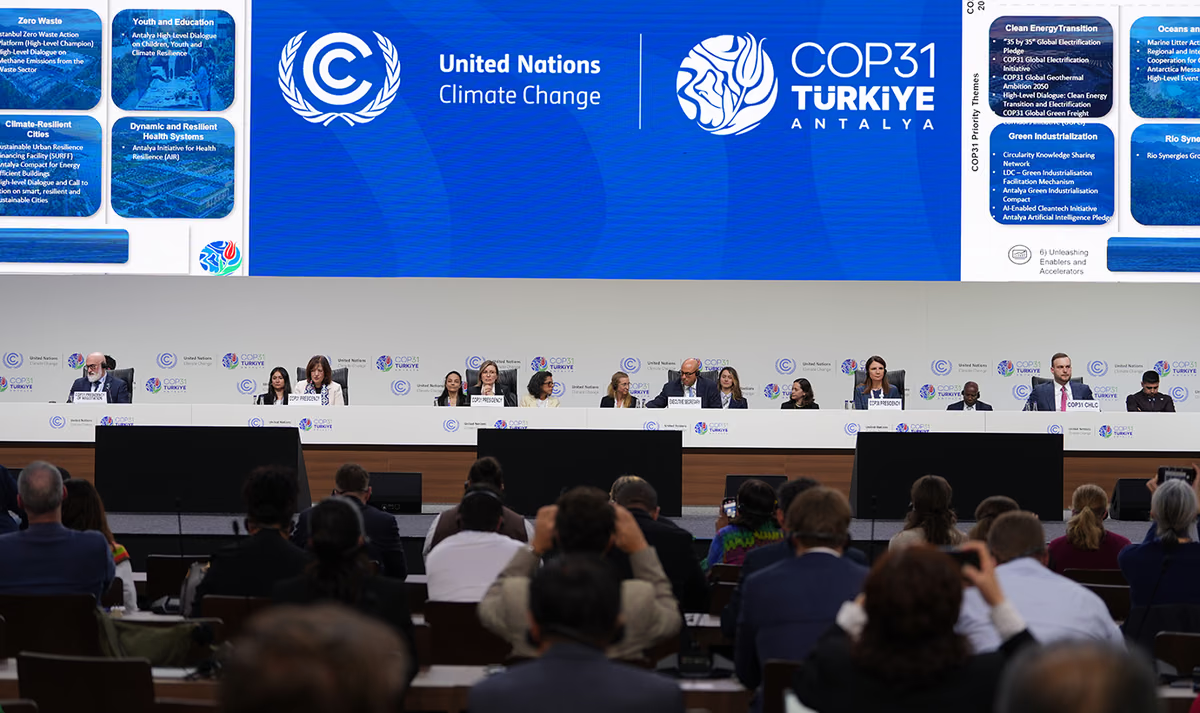
Describing COP31 as one of the most widely attended gatherings of the United Nations climate process, Ağırbaş reported that, as of the first weekend, 102,610 registered participants in the Blue Zone and 212,000 visitors in the Green Zone had been reached. He said 95 heads of state or government and 7 heads of international organizations took part in the summit, more than 300 ministers joined the negotiations and more than 1,500 panels and sessions were held in the Green Zone.
Noting that participation reflects the scale of expectations and shared responsibility for global climate action, Ağırbaş gave the message “COP31’s Success Will Be Measured by the Steps Taken on the Ground After the Summit.” He stressed that success will be judged by the decisions taken throughout the summit together with how these decisions are implemented in countries and at the local level.
Noting that Türkiye based COP31 on dialogue, consensus and widening common ground, Ağırbaş said that in the next stage they aim to move forward toward Addis Ababa, which will host COP32, with practices that have a counterpart on the ground in addition to new decision texts.
Place on the Action Agenda and the Türkiye Experience
Ağırbaş said that, for the first time at United Nations climate conferences, zero waste entered an area of action and negotiation of this scale with its own theme and stage. He said that the approach being one of the 10 core items of the COP31 Action Agenda shows the point the transformation that began in Türkiye in 2017 has reached at the international level. He thanked Murat Kurum, Minister of Environment, Urbanization and Climate Change and COP31 President, and his team for their contributions to this process.
Stressing that zero waste and the circular economy should be regarded as fundamental tools in climate action rather than merely complementary elements, Ağırbaş noted that the Türkiye experience offers a model that can be applied in other countries.
Reporting that 90 million tons of waste were brought back into the economy in Türkiye in 2017–2025, Ağırbaş said that through this work the felling of 613 million trees and 180 million tons of greenhouse gas emissions were prevented. Noting that the recovery rate rose from 13 percent to around 40 percent, he said targets of 60 percent recovery for 2035 and 70 percent for 2053 have been set.
The Report Examines Reduction Opportunities Extending to 2050
Introducing the “Our Zero Waste Future” report at the meeting, Ağırbaş shared the potential of zero waste and circular economy practices in the fight against climate change. The report, prepared with international scientific contribution, addresses climate opportunities beyond the energy transition.
According to the report, preventing 149 gigatons of carbon dioxide equivalent greenhouse gas emissions is possible in 2025–2050 through holistic zero waste and circular economy practices. Of this, 37 gigatons come from improving waste management, preventing food waste, and reuse and repair, while 112 gigatons come from transformation in buildings, infrastructure and durable consumer goods.
Ağırbaş noted that the report shows that the fight against climate change cannot be treated as limited to energy production and consumption. He said a holistic transformation covering production, design, material use and consumption habits is needed.
Saying that the extraction and processing of natural resources is linked to more than 55 percent of global greenhouse gas emissions, Ağırbaş noted that the world economy’s circularity rate remaining at 6.9 percent shows the need to use resources more efficiently.
Stressing that most of the solutions in the report consist of methods that exist and are applicable today, Ağırbaş said the 149-gigaton potential can be realized through shared will and implementation. The message “We Can Realize the 149-Gigaton Emission Reduction Potential” also came to the fore at the meeting.
2035 Targets Cover Waste Growth and Circular Material Use
Describing the COP31 Presidency’s targets in zero waste and the circular economy, Ağırbaş said the aim is to reduce the projected increase in municipal waste by at least 50 percent by 2035. He stated that in the same period the aim is to raise the circular material use rate from 6.9 percent to at least 15 percent.
Saying that the “Our Zero Waste Future” report offers a perspective reaching to 2050 beyond these targets, Ağırbaş regarded Türkiye’s raising its recovery rate from 13 percent to around 40 percent in nine years as an indication that transformation is possible.
Fieldwork Against Plastic Pollution and the 2053 Vision
Also referring to plastic pollution and microplastics, Ağırbaş said plastic production has increased 230-fold over the last 70 years, exceeding 460 million tons. He noted that only 9 percent of plastic waste can be recycled.
Sharing data from the Türkiye Plastic Waste Workshop Final Report, Ağırbaş said 50 percent of plastic waste is landfilled, 19 percent is incinerated and 22 percent leaks into nature uncontrolled.
Describing Türkiye’s fieldwork in the fight against plastic pollution, Ağırbaş said meetings chaired by governors were held in Adana, Mersin, Muğla and Antalya in August and September. He said the Türkiye Plastic Waste Workshop that followed in Istanbul included 17 ministries, 34 academics from Istanbul Technical University and more than 400 participants. He noted that the work at the workshop’s 15 thematic tables forms the basis for the 2053 Türkiye Plastic Vision.
Ağırbaş stressed that, on plastic, necessary use must be separated from unnecessary consumption, waste must be prevented and post-use processes must be secured. He noted that work carried out with this approach continues on the ground.
The Women Ambassadors Network Aims to Go International
Announcing that they launched the Zero Waste Women Ambassadors program with the Ministry of Family and Social Services to strengthen social participation, Ağırbaş said they aim to establish a network of volunteer women in 81 provinces. He said they aim for one million women to be actors carrying the zero waste transformation.
Ağırbaş noted that the aim is also to turn this structure into an international women ambassadors network in the period leading up to 30 March, the International Day of Zero Waste. Emphasizing zero waste’s strong link to Anatolia’s traditional culture of thrift, sharing and reuse, he drew attention to spreading the habits of preventing food waste, repairing and using items, and sharing surplus products.
Lasting Practices and Access to Finance Emphasized
Ağırbaş noted the importance of zero waste and the circular economy finding a place in international decision processes as fundamental tools of climate action. He said adaptation and transformation finance must also reach the countries that need this capacity most.
Recalling President Recep Tayyip Erdoğan’s words at the COP31 Leaders’ Session, “At the center of our civilization lies respect for nature. The earth is a sacred trust that must be protected and cared for,” Ağırbaş said this understanding expresses responsibility toward future generations.
The message “When Leaving Antalya, We Should Be Able to Say Something Has Changed” came to the fore regarding the post-summit period. Referring also to the words COP31 President Murat Kurum voiced during the summit, “We want people, when they leave Antalya, to be able to say, ‘Yes, something changed in Antalya,’” Ağırbaş said they will continue working so that the will shown at COP31 turns into lasting practices.
Noting that as a Foundation they base their national and international work on shared responsibility and implementation, Ağırbaş listed preventing food waste, repairing items, sharing unused products with those in need, institutions preferring durable products and municipalities strengthening waste collection systems among the basic steps of the transformation.
At the end of his speech, Ağırbaş said: “Our zero waste future is not a wish; it is a decision. And we can make this decision together.”
The Zero Waste Approach’s Place on the International Agenda Grows Stronger
The zero waste approach, which has become a global movement under the leadership of Her Excellency Emine Erdoğan, Founder of the Zero Waste Movement, Chair of the United Nations High-Level Advisory Board on Zero Waste and Honorary President of the Zero Waste Foundation, is among the important climate action topics of COP31. Through its work in Antalya, international cooperation and initiatives bringing different stakeholders together, the Zero Waste Foundation contributes to strengthening the place of zero waste and the circular economy on the global climate agenda.