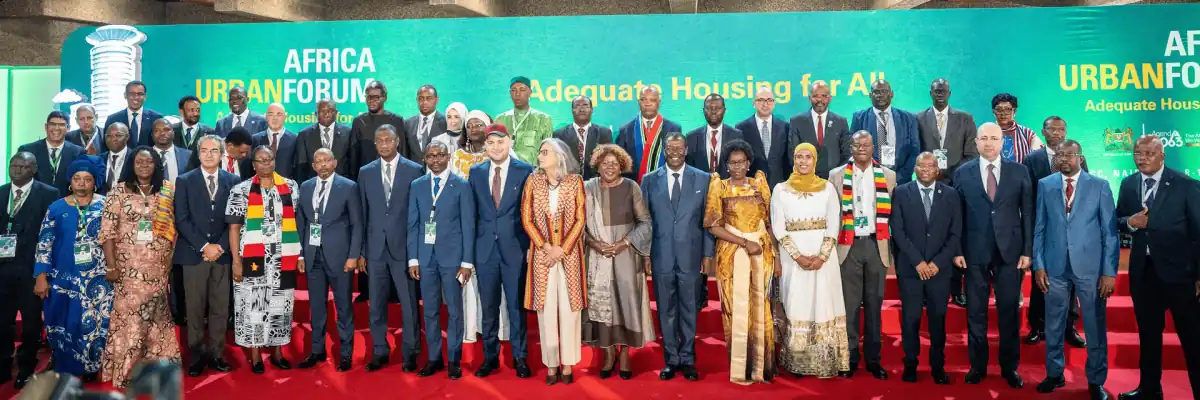
Samed Ağırbaş, President of the Zero Waste Foundation and COP31 High-Level Climate Champion, gave a comprehensive interview to allAfrica, one of Africa's leading media platforms, during his contacts in Kenya.
Speaking during his meetings in Africa, one of the regions where the impacts of the climate crisis are felt most intensely, Ağırbaş made important assessments regarding the strengthening of renewable energy, food systems, youth-led innovation, and zero waste initiatives.
Africa-Focused Climate Agenda
Emphasizing that the Zero Waste Movement has evolved into a global transformation model in line with the vision of First Lady Emine Erdoğan, Founder of the Zero Waste Movement, Chair of the United Nations Advisory Board of Eminent Persons on Zero Waste, and Honorary President of the Zero Waste Foundation, Ağırbaş stated that it is critically important for governments, the private sector, and societies to accelerate their actions ahead of the United Nations Climate Change Conference of the Parties (COP31), which will be held in Türkiye from November 9-20. He expressed that local initiatives play a decisive role in a sustainable and resilient future.
"Nearly 500 Initiatives, 58 in Africa"
Providing information about the efforts carried out within the scope of the Global Climate Action Agenda, Ağırbaş said that approximately 500 active climate initiatives are being coordinated, 58 of which are directly related to Africa. Noting that 40 percent of these initiatives include local communities, he emphasized that areas such as food security, access to energy, urban infrastructure, and social development are priorities.
Touching upon concrete applications through the example of Kenya, Ağırbaş conveyed that energy access has been increased with mini-grids and solar energy systems, food losses have been reduced with cold chain investments, and cities are being guided toward climate-resilient water systems.
"Africa Produces Global Solutions"
Drawing attention to the role of local communities and the private sector in climate action in Africa, Ağırbaş stated that the solutions developed on the continent are applicable not only locally but also on a global scale. He expressed that finance, policy coherence, and technical capacity should be addressed together to disseminate these solutions.
Concrete Projects and Financing Mechanisms
Emphasizing that five key elements are critical for the realization of climate solutions, Ağırbaş said that policy, financing, market balance, technology, and technical capacity must be developed together. Prominent initiatives in this context include:
• Land restoration projects aiming to support 20 million smallholder farmers
• Mechanisms facilitating access to finance for food systems
• Programs ensuring waste reduction through compost centers and food banking networks
Zero Waste Roadmap for Cities
Offering practical suggestions for the transition of African cities to zero waste systems, Ağırbaş stated that the process focuses on improving existing systems rather than introducing new burdens. Prominent topics include:
• Reduction of waste at the source
• Strengthening sorting and collection systems
• Investing in composting and recovery solutions
• Integrating the zero waste approach into urban planning
Food Waste: Both a Climate and Development Crisis
Stating that food waste arises for different reasons depending on the region, Ağırbaş expressed that storage and logistics infrastructure deficiencies lead to significant losses, especially in Africa.
Reminding that approximately 1 billion tons of food is wasted globally every year, Ağırbaş emphasized that this is both a climate and a development crisis. He stated that reducing global food waste by 20 percent has the potential to eliminate the problem of hunger.
Priority at COP31: Combating Food Waste
Ağırbaş stated that food waste and food security will be among the main priorities during the COP31 process. In this context, he noted that the dissemination of practices such as land restoration, regenerative agriculture, and food banking is targeted.
Youth and Local Leadership Come to the Fore
Stating that youth-led climate solutions are an important part of the Global Climate Action Agenda, Ağırbaş said that young people have initiated a strong transformation in agriculture, entrepreneurship, and sustainability in Africa.
Giving examples from Uganda, Liberia, and various other African countries, Ağırbaş expressed that young leaders make local solutions visible on a global scale.
"Our Role: Building a Bridge Between Local and Global"
Also touching upon his duty as the COP31 High-Level Climate Champion, Ağırbaş said that his primary responsibility is to build a bridge between local initiatives and international negotiations.
Stating that he held direct meetings with local leaders, women, and youth during his contacts in Africa, Ağırbaş drew attention to the importance of carrying the voices of these actors to global platforms.
Call to Africa for COP31
Emphasizing that Africa has great potential in terms of climate solutions, Ağırbaş stated that practices on the continent must be disseminated globally.
Drawing attention to the importance of the 58 initiatives carried out in the fields of energy, agriculture, urbanization, and biodiversity, Ağırbaş invited stakeholders in Africa to actively participate in the COP31 process.
Emphasis on Finance and Cooperation on a Global Scale
Stating that initiatives carried out in the fields of climate finance and circular economy should be accelerated, Ağırbaş presented solution proposals across a wide spectrum, from insurance mechanisms to innovation funds, and from youth programs to city projects.
Finally, stating that the success of the Global Climate Action Agenda is directly proportional to the power of the actors contributing to this process, Ağırbaş gave the message, "We must disseminate existing solutions faster and reach more people."


