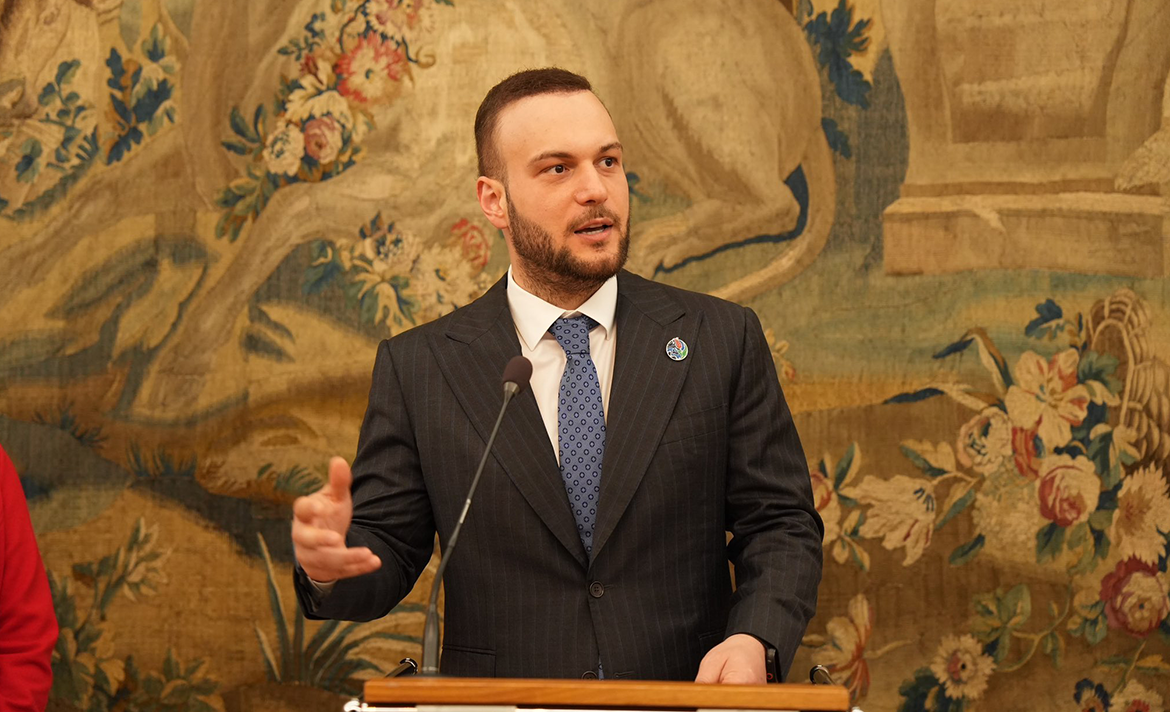
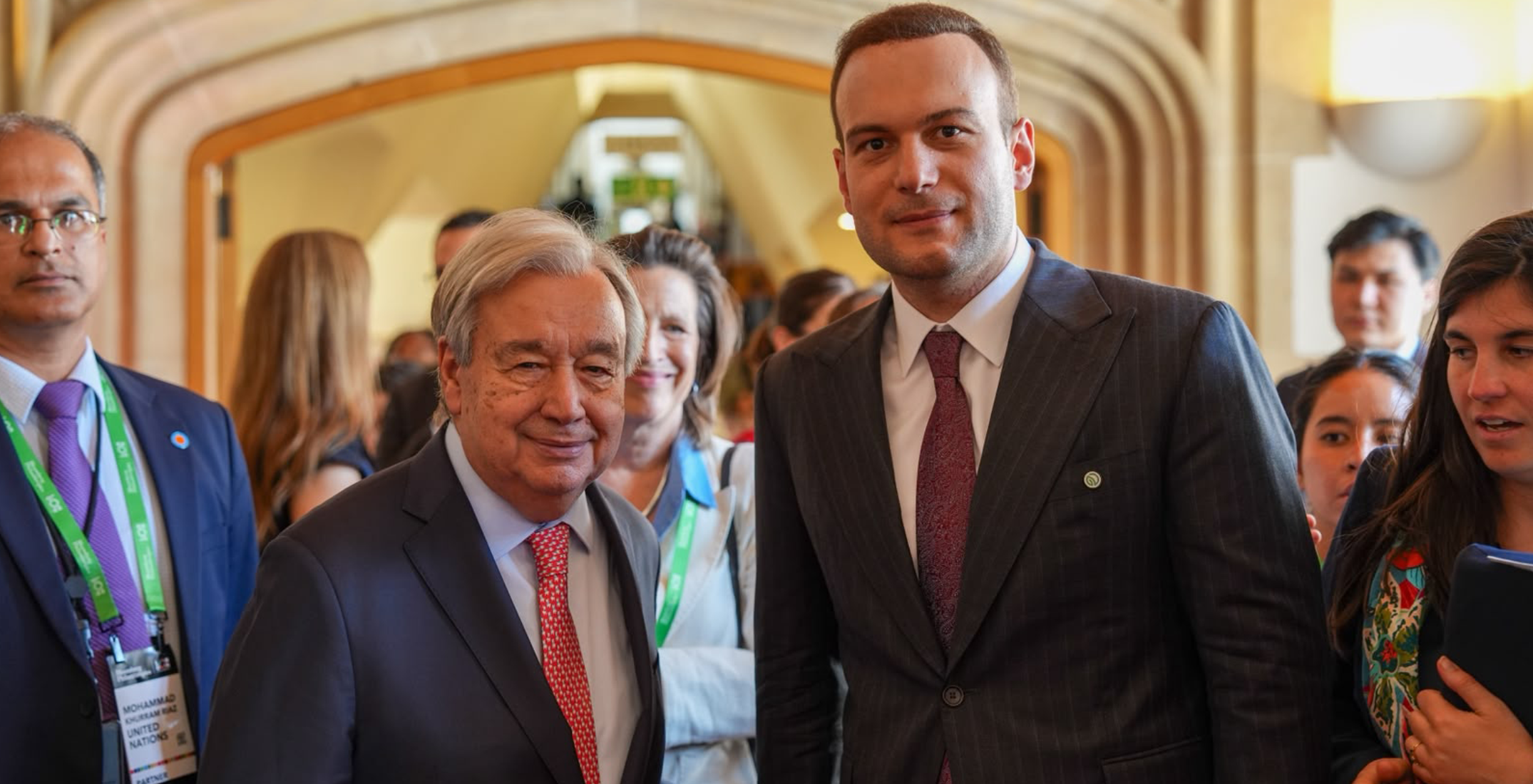
The roundtable meeting titled "Towards COP31: The Role of the Private Sector in the Climate Action Agenda – Private Sector Consultation Series Türkiye", organized in cooperation with the Zero Waste Foundation, United Nations Türkiye, and UN Global Compact Türkiye, was held with intense participation in Ataşehir, Istanbul on May 21, 2026.
Bringing together United Nations representatives, global companies, business organizations, financial sector leaders, sustainability experts, and private sector representatives around the same table, the meeting served as an important diplomatic and strategic platform for shaping the private sector perspective towards the COP31 process to be hosted by Türkiye on November 9–20, 2026. During the meeting, it was emphasized that the private sector is not merely a supporter, but one of the main actors of transformation in the global solutions to be developed against the climate crisis.
At the opening of the program, Samed Ağırbaş, President of the Zero Waste Foundation and COP31 High-Level Climate Champion, Dr. Babatunde A. Ahonsi, United Nations Resident Coordinator in Türkiye, Güliz Öztürk, Chair of the Board of UN Global Compact Türkiye, and Melih Ecertaş, Board Member of Turkish Airlines (THY), delivered speeches. In the opening addresses, the critical importance of cooperation between the public sector, private sector, and civil society in combating climate change was emphasized, while the global role Türkiye is preparing to undertake in the COP31 process was also comprehensively discussed.
Istanbul is Becoming the Center of Global Zero Waste Studies
Delivering the opening speech, Zero Waste Foundation President and COP31 High-Level Climate Champion Samed Ağırbaş stated that the Zero Waste Movement, which began in 2017 under the leadership of First Lady Emine Erdoğan, has today transformed into a global environmental movement resonating in 193 countries. Noting that 183 countries will attend the Zero Waste Forum to be held in Istanbul on June 5–7, Ağırbaş said, "There is no other meeting in the world organized by a non-governmental organization and attended by 183 countries." Pointing out that world-leading universities such as Harvard and Oxford are among the partners of the forum, Ağırbaş stated that Istanbul has become the center of global zero waste studies.
Emphasizing that Istanbul is a city capable of pioneering the world in environmental diplomacy with its historical and cultural capacity, Ağırbaş drew attention to the critical importance of the contribution of private sector representatives in this process. Stating that they received over 1,500 event applications within the scope of Istanbul Zero Waste Week, Ağırbaş expressed that a broad participation base has been formed, ranging from universities to non-governmental organizations, and a strong atmosphere of environmental awareness will emerge across the city.
The COP31 Process is a Historic Transformation Opportunity for Türkiye
Stating in his speech that the COP31 process offers a historic transformation opportunity for Türkiye, Ağırbaş said that a new era in Türkiye's climate and environmental policies could begin if public institutions, the business world, universities, and non-governmental organizations act together. Pointing out that the climate crisis is not only environmental but directly connected to social justice, food security, and global inequalities, Ağırbaş noted that millions of people die every year due to hunger and thirst, emphasizing that the current global system is not sustainable.
Four Main Priority Areas Determined for COP31
Ağırbaş also shared with the public the four main priority areas determined for COP31 under the leadership of First Lady Emine Erdoğan, Honorary President of the Zero Waste Foundation and Chair of the United Nations Advisory Board of Eminent Persons on Zero Waste. He announced these topics as combating food waste, energy efficiency, water efficiency, and strengthening the role of women, children, and youth in climate policies. Announcing that a 10-year global campaign will be launched with the support of over 100 countries, especially regarding the reduction of food waste, Ağırbaş pointed out that the hunger crisis could be significantly resolved if food waste is reduced by 20 percent worldwide.
Expressing that energy efficiency is critically important for Türkiye in terms of economic independence and sustainable development, Ağırbaş noted that Türkiye spends over 100 billion dollars annually on energy imports and emphasized the importance of social awareness. Regarding water efficiency, he pointed out that Türkiye is facing increasing water stress and said that the protection of natural resources has now become a strategic security issue.
Aiming for the Representation of Groups Most Affected by the Climate Crisis in the COP31 Process
Stating that women, children, and youth are the social groups most affected by climate change, Ağırbaş expressed that they aim for these segments to be more strongly represented in the COP31 process. In this context, announcing that a special support mechanism for disadvantaged groups has been established by the Zero Waste Foundation, Ağırbaş stated that young people and entrepreneurs developing projects in the field of environment and climate in different parts of the world but lacking access to financial resources will be supported.
In his speech, Dr. Babatunde A. Ahonsi, United Nations Resident Coordinator in Türkiye, emphasized that thanks to its developing industrial infrastructure, dynamic economy, and international connections, Türkiye has the potential to make significant contributions to global climate goals. Noting that Türkiye's Climate Law studies, Nationally Determined Contributions, sustainable finance mechanisms, and green transformation policies create a transformative momentum, Ahonsi expressed that COP31 should not merely be a negotiation platform but a historic turning point where implementation, financing, and concrete transformation processes will be put into practice.
COP31 Headings Will Shape the Future Strategies of Companies
In her speech, UN Global Compact Türkiye Board Chair Güliz Öztürk stated that the climate crisis is no longer just an environmental issue for companies, but an economic and strategic one. Expressing that many areas from supply chains to energy costs are directly affected by climate change, Öztürk said that the private sector is at the center of the solution. She noted that areas such as zero waste, food security, green industrialization, clean energy transformation, and climate adaptation, which are among the main agenda items of COP31, will shape the future strategies of companies.
The Aviation Sector is Going Through a Major Sustainability-Oriented Transformation Process
THY Board Member Melih Ecertaş also stated that the aviation sector is undergoing a major sustainability-oriented transformation process, expressing that climate change is no longer a risk of the future but a systemic reality of today. Noting that the Turkish aviation sector has taken important steps in line with emission reduction and decarbonization targets, Ecertaş emphasized that the entire ecosystem, including the supply chain, must be included in the transformation process to achieve net-zero emission targets.
Comprehensive Evaluations Were Made
In the roundtable sessions held after the opening speeches, comprehensive evaluations were made under the headings of "Mitigation and Decarbonization Roadmaps," "Climate Adaptation and Resilience," "Corporate Climate Target Setting and Reporting," and "Climate Finance and Investments." Participants multidimensionally addressed the fundamental problems faced by the private sector in the transition to a low-carbon economy, sustainable financing instruments, green bond applications, sustainability-linked loan models, and compliance processes with the Türkiye Sustainability Reporting Standards.
Cooperation Models for the COP31 Process Came to the Agenda
The importance of strengthening public-private sector cooperation was also highlighted at the meeting. Noting that the climate crisis requires a multi-stakeholder approach, participants expressed that developing sustainable cooperation mechanisms among public institutions, international organizations, and the business world has become mandatory. Throughout the event, while good practice examples were shared, concrete policy proposals and cooperation models for the COP31 process were also brought to the agenda.
It is aimed that the evaluations and suggestions that emerged at the end of the meeting will provide significant contributions to Türkiye's sustainable development goals, international climate negotiations, and the COP31 preparation process. While it was emphasized that the initiative is a strategic platform strengthening the transformation capacity of the private sector in the fields of environmental sustainability, circular economy, green transformation, and climate resilience, it was stated to be a significant step supporting Türkiye's leadership vision in global climate diplomacy.
Shaped in line with the "Our Common Home, the World" vision put forward by First Lady Emine Erdoğan, Founder of the Zero Waste Movement, Chair of the United Nations Advisory Board of Eminent Persons on Zero Waste, and Honorary President of the Zero Waste Foundation; this consultation process is evaluated as a strategic diplomacy platform that strengthens the sense of shared responsibility against the climate crisis, encourages the establishment of strong partnerships between the public and private sectors, and issues a call for concrete action for a sustainable future.