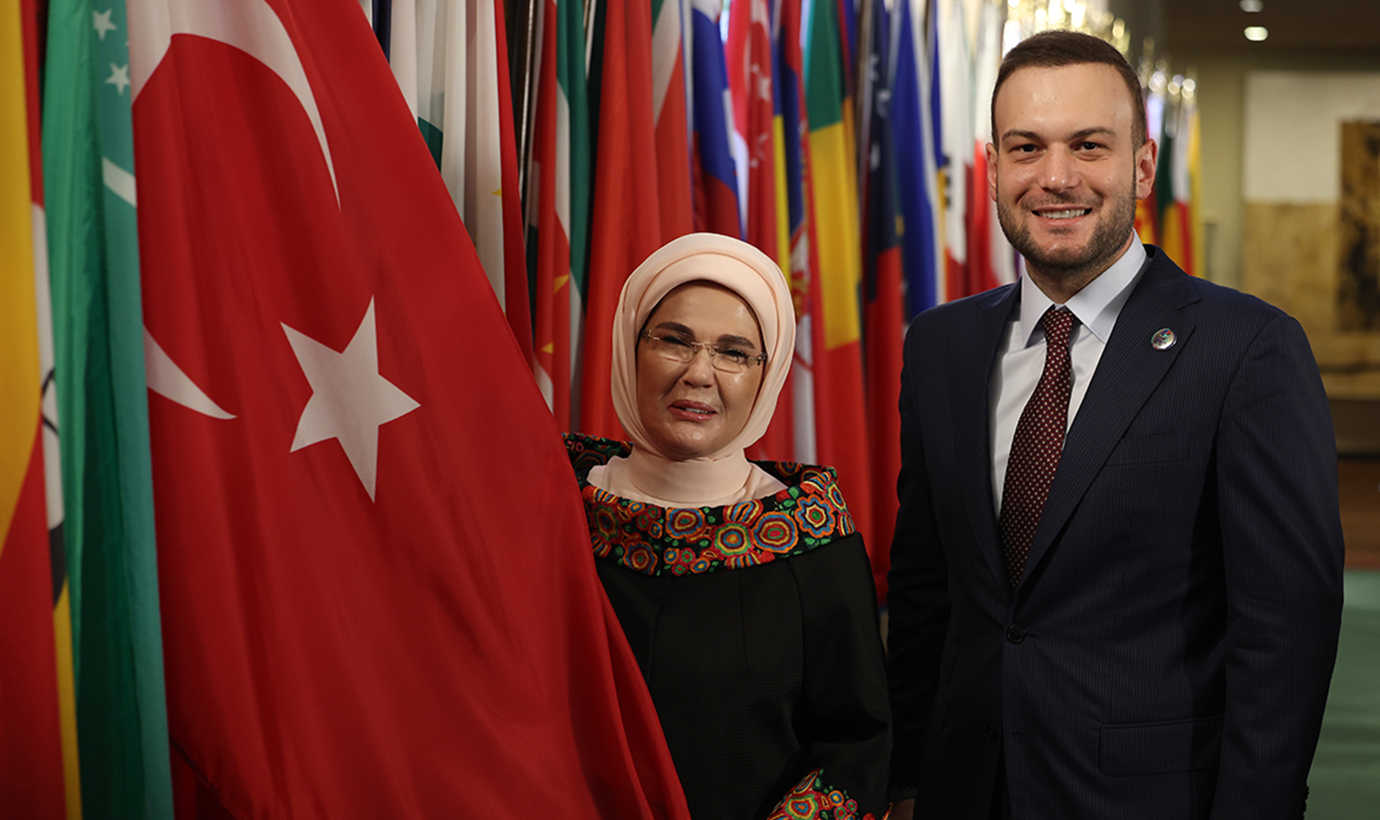
Launched in Türkiye on 27 September 2017 under the auspices of First Lady Emine Erdoğan, the Zero Waste Movement has evolved in its ninth year into a global transformation approach that goes beyond waste management, bringing together resource efficiency, the circular economy, and climate action.
The Zero Waste Movement, one of Türkiye’s comprehensive transformation initiatives in the fields of environment and sustainability, has evolved beyond national borders during the nine years since its launch on 27 September 2017 under the auspices of First Lady Emine Erdoğan.
The strong commitment of President Recep Tayyip Erdoğan to environmental protection, efficient use of natural resources, preventing waste, and combating climate change constitutes one of the important foundations of Türkiye’s policies in this field.
From the outset, Zero Waste developed as a comprehensive approach that went beyond simply collecting and recycling waste, focusing on preventing waste, using resources efficiently, promoting sustainable production and consumption habits, and leaving a livable world for future generations. Over the past nine years, it has evolved beyond Türkiye’s borders into a global environmental and sustainability agenda.
Today, the Zero Waste approach stands out as an important component of a transformation agenda that brings together climate change, biodiversity loss, pollution, resource security, food waste, water management, and the circular economy from a common perspective.
Under the leadership of Minister of Environment, Urbanization and Climate Change Murat Kurum, Türkiye’s environmental and climate policies are also contributing to the stronger integration of the Zero Waste approach with climate action.
As part of Türkiye’s COP31 Presidency process, the Zero Waste approach continues to stand out as an important component of climate action, alongside resource efficiency and the circular economy.
From Türkiye to the UN Agenda
One of the most important milestones in the international development of the Zero Waste Movement was United Nations General Assembly Resolution 77/161, titled “Promoting Zero-Waste Initiatives,” adopted on 14 December 2022.
Prepared under Türkiye’s leadership and co-sponsored by 105 countries, the resolution designated 30 March as International Zero Waste Day. This gave the Zero Waste approach global visibility through an official day on the international community’s common agenda.
The United Nations calls on states, UN entities, local governments, the private sector, academia, civil society, women, and youth to promote zero waste practices and contribute to sustainable production and consumption patterns as part of International Zero Waste Day.
This development represented an important milestone in transforming the Zero Waste Movement, launched in Türkiye in 2017, from a national environmental project into a globally shared transformation agenda.
Emine Erdoğan’s Work at the UN Level
The international visibility of the Zero Waste Movement has also been strengthened by the work carried out by First Lady Emine Erdoğan on international platforms.
On 30 March 2023, Emine Erdoğan delivered the opening address at the high-level meeting held at the United Nations General Assembly to mark International Zero Waste Day. In the official UN programme, she was listed as the keynote address speaker.
UN Secretary-General António Guterres also highlighted Türkiye’s and Emine Erdoğan’s leadership on zero waste at the meeting, stating that Türkiye’s Zero Waste project could serve as an example for other countries. Guterres invited Emine Erdoğan to chair the UN Advisory Board of Eminent Persons on Zero Waste.
Established on 12 April 2023, the UN Advisory Board of Eminent Persons on Zero Waste aims to share successful practices and good examples between countries, raise global awareness, and promote the Zero Waste approach. The Board is chaired by Emine Erdoğan and consists of 13 members.
“Our World Is Our Common Home” Becomes a Global Vision
At the heart of the Zero Waste Movement is an understanding that sees the environment not only as something to be protected, but also as a shared responsibility and trust owed to future generations.
Expressed through the “Our World Is Our Common Home” approach, this understanding encompasses a broad transformation ranging from reconsidering consumption culture and using resources efficiently to preventing waste at source, reuse, and recycling.
Within this framework, Zero Waste is considered not merely as “waste management,” but as a systems approach connecting different fields, from production and consumption to design and finance, and from urban planning to education.
The United Nations also links the Zero Waste approach to strengthening sustainable consumption and production patterns. In a statement in 2023, UN Secretary-General António Guterres highlighted the importance of Zero Waste for the transition to a circular economy and the development of modern waste management systems.
A Growing Implementation Network in Türkiye
Since its launch in Türkiye in 2017, the Zero Waste Movement has reached a broad range of implementation areas, from public institutions and local governments to educational institutions and the private sector.
By the end of 2025, Türkiye’s recovery rate had risen to 37.53 percent, while approximately 90 million tonnes of waste had reportedly been recovered and returned to the economy, generating an economic contribution of approximately 365 billion Turkish liras.
During the same period, recovery efforts also contributed to significant savings in energy, water, and raw materials, as well as reductions in greenhouse gas emissions.
The Zero Waste approach has also become an important component of Türkiye’s resource efficiency and circular economy policies linked to its 2053 net-zero emissions target.
Economic Value Alongside Environmental Gains
The nine-year journey of the Zero Waste Movement has attracted attention not only for its environmental gains but also for its concrete contribution to the Turkish economy.
The recovery rate, which stood at 13 percent in 2017, increased to 37.53 percent by the end of 2025. During the same period, approximately 90 million tonnes of recyclable waste were recovered and returned to the economy through the Zero Waste Movement. Processing this recovered waste generated an economic contribution of approximately 365 billion Turkish liras.
The scale of these gains extends beyond economic value. Zero Waste practices have so far resulted in approximately 270 billion kilowatt-hours of energy savings, 2 trillion litres of water savings, and 60 billion litres of oil savings. Recovery activities prevented the cutting of approximately 613 million trees and avoided approximately 180 million tonnes of greenhouse gas emissions. They also eliminated the need for waste storage areas equivalent to approximately 55,000 football fields.
These figures demonstrate that Zero Waste is not only an environmental responsibility, but also a strategic economic model for protecting natural resources, increasing resource efficiency, and returning economic value to the production cycle.
Zero Waste Gains Greater Visibility at Global Climate Gatherings
In its ninth year, the Zero Waste Movement continues as an approach contributing to the development of international norms and multilateral cooperation. Alongside achievements at the United Nations level, multi-stakeholder platforms such as the Zero Waste Forum strengthen knowledge and experience sharing globally.
The growing international visibility of the Zero Waste Movement is also reflected in the active role of the Zero Waste Foundation at major climate weeks around the world. The Foundation participates as a key stakeholder in important platforms shaping the global climate agenda, particularly in London and New York, highlighting the relationship between zero waste, resource efficiency, the circular economy, and climate action.
The approach aims to make environmental awareness part of everyday life by engaging different segments of society, from public institutions and local governments to schools, universities, businesses, civil society, and individuals.
A New Phase: From Waste Management to Resource Management
The ninth year of the Zero Waste Movement also marks a new phase in the transformation of the environmental agenda.
Increasing resource consumption, waste volumes, plastic pollution, food loss, water stress, and climate change around the world are making waste management too comprehensive an issue to be addressed in isolation.
This approach also establishes a direct connection with climate action. Lower resource consumption, longer product lifespans, reuse, recycling, and circular production models are among the tools that can contribute to reducing pressure on natural resources and the environmental impacts associated with waste.
In this respect, the Zero Waste Movement continues in its ninth year not merely as a movement celebrating past achievements, but as a global vision calling for a reconsideration of the production and lifestyles of the future.
Shared Responsibility, Shared Future
Launched in Türkiye on 27 September 2017, the Zero Waste Movement continues in its ninth year to build a shared global perspective beyond national borders.
The UN General Assembly’s designation of 30 March as International Zero Waste Day and Emine Erdoğan’s chairmanship of the UN Advisory Board of Eminent Persons on Zero Waste are among the important developments demonstrating the international recognition of the approach put forward by Türkiye.
In its ninth year, the Zero Waste Movement continues to advance the idea that less waste, more efficient resource use, more circular economies, and a more livable future are possible through the understanding that “Our World Is Our Common Home.”
Because Zero Waste is not only about reducing waste; it means recognizing the value of resources, preventing waste, and protecting the future today.