The relationship between preventing waste before it is created, protecting resources and circular economy practices and climate policy was discussed at a session organized by the Zero Waste Foundation at COP31. The scope and limits of the zero waste approach were assessed within a framework stretching from practices in cities to international policy.
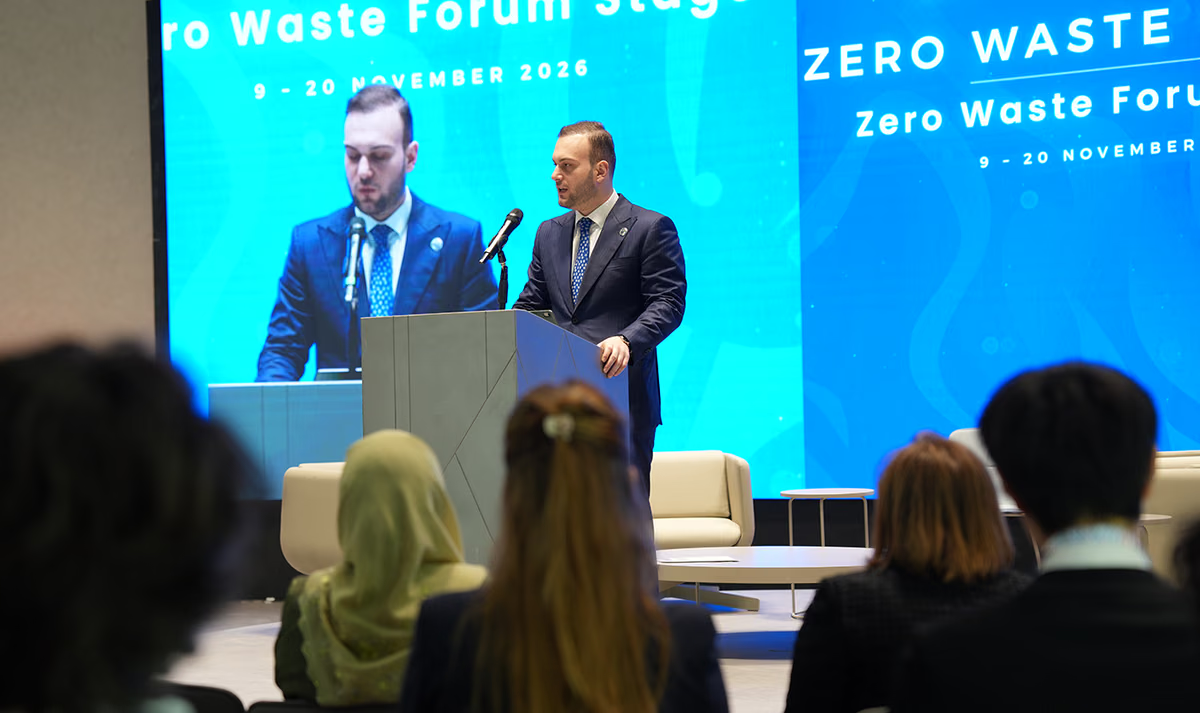
The Zero Waste Foundation held the session titled “Zero Waste: What It Means, What It Does Not Cover and Why It Is Climate Action” on the Zero Waste Forum Stage in the COP31 Blue Zone.
The session was moderated by Carlos Silva Filho and brought together Samed Ağırbaş, President of the Zero Waste Foundation and COP31 High-Level Climate Champion; Fatma Şahin, Mayor of Gaziantep Metropolitan Municipality; Atiq Zaman, faculty member at the Curtin University Sustainability Policy Institute; and Maimunah Mohd Sharif, former Executive Director of UN-Habitat.
Production and Consumption Processes Addressed Together with Climate Policy
How the concept of zero waste should be understood, and the scope and limits of the approach, were among the topics of discussion. The use of resources in the production and consumption stages was examined from different perspectives together with waste prevention, reuse and recycling processes.
While it was noted that collecting and recycling waste is only one part of this approach, attention was drawn to the need to change production and consumption habits. Protecting natural resources, reducing waste and spreading circular economy practices were also on the session’s agenda.
The contribution of practices that prevent waste generation to reducing greenhouse gas emissions, easing pressure on natural resources and developing sustainable production and consumption models was assessed.
Ağırbaş Highlighted Cultural Values and Shared Participation
Delivering the opening speech, Samed Ağırbaş spoke about the power the zero waste approach holds in turning climate goals into implementation. He underlined the importance of the leadership, under the vision and patronage of Her Excellency Emine Erdoğan, that has turned a national initiative into a global movement.
Noting that there is no room for waste in Turkish culture, Ağırbaş stressed the guiding role of traditional values in reaching a sustainable future. “There is no room for waste in our culture. Values such as making use of what we have, not wasting even a piece of bread, repairing what is broken and taking care of what we own can carry us to a more sustainable future,” Ağırbaş said.
Ağırbaş explained that zero waste includes, besides recycling, preventing waste before it is generated, designing products to last longer and using resources in a circular way. Emphasizing the people-centered nature of the process, Ağırbaş said: “Zero waste can reduce emissions, prevent pollution and create jobs. But above all, zero waste is people-centered. Everyone should have the opportunity to take part in this process and benefit from its gains.”
A Call for Joint Work After International Engagements
Noting that they aim to make zero waste an integral part of public policy, business decisions and concrete investments, Ağırbaş expressed their excitement at being present on the first day of COP31. He said the visits to more than 40 countries under the leadership of COP31 President Murat Kurum, and the consultation meetings held with different stakeholders, have created a ground of dialogue for a shared future.
To carry these experiences into joint work on a global scale, Ağırbaş made the call: “Let us turn our local experiences and our shared engagement into a global process. Let us continue working together for our future and our planet.”
Şahin Spoke of the Foundation Tradition That Protects Nature
After greeting the participants, Fatma Şahin, Mayor of Gaziantep Metropolitan Municipality, thanked those who contributed to the Zero Waste Movement’s transformation from a national initiative into a global movement. In her speech she addressed the understanding of Türkiye’s deep-rooted foundation (vakıf) civilization to protect nature, living beings and all life.
Referring also to the work of Zero Waste Foundation President Samed Ağırbaş, Şahin said: “We come from the foundation civilization. Our civilization is a foundation civilization. We come from a civilization that thinks of the bird’s nest.”
Saying she finds the Zero Waste Foundation’s work important for carrying civilizational values into today’s conditions, Şahin said: “This understanding, stretching from the local to the universal and from the past to the future, offers us a new perspective.” Drawing attention to the role local governments play in sustainable development, Şahin stressed that development and democracy begin at the local level and shared Gaziantep’s work on the environment and climate.
Gaziantep Metropolitan Municipality’s Renewable Energy Work Shared
Explaining that they have prepared action plans in Gaziantep to protect air, water and the environment with the goal of a green city, Şahin described the renewable energy work with the words: “We are a municipality that has converted all the energy it consumes into renewable energy. As Gaziantep, we have prepared action plans that will protect air, water and soil.” Şahin also spoke about the city’s international achievements.
Cities’ Experience and Cooperation Between Institutions
The role of local governments in spreading zero waste practices and cities’ resource management capacity were discussed together with international cooperation. The discussion focused on how solutions developed locally contribute to national policies and global climate goals.
The importance of bringing together academic knowledge, the experience of international institutions, the implementation capacity of local governments and the contribution of civil society for putting zero waste goals into practice was assessed.
The Türkiye-Led Movement Continues Its Global Work
The movement, which began under the leadership of Her Excellency Emine Erdoğan, Founder of the Zero Waste Movement, Chair of the United Nations High-Level Advisory Board on Zero Waste and Honorary President of the Zero Waste Foundation, operates on a global scale to use resources efficiently, prevent waste and spread a culture of sustainable living. The approach, which has become an international environmental movement under Türkiye’s leadership, contributes to the fight against the climate crisis with a holistic transformation model that also covers waste management.
In line with President Recep Tayyip Erdoğan’s strong will in the fields of environment and climate, Türkiye is developing international cooperation on sustainable development and climate action. COP31, held in Antalya under the leadership of Murat Kurum, Minister of Environment, Urbanization and Climate Change and COP31 President, provides a meeting ground for turning climate goals into concrete practice, strengthening international solidarity and developing solution-oriented policies.
Through the sessions it organizes throughout COP31 and its work with international stakeholders, the Zero Waste Foundation also aims to share good practice examples, develop concrete solution partnerships and strengthen zero waste’s place on the global climate agenda.